Walking out of the Francis Bacon show at the Metropolitan Museum and looking at the beautiful Joachim Patinir triptych in the European Paintings Galleries.
The Alice Neel show at David Zwirner's Gallery in Chelsea
When Philip Guston began showing this work at Marlborough in 1970, the negative reaction of the established New York art world was so overwhelming that the gallery would not renew his contract to exhibit there. Hilton Kramer ridiculed the new paintings, and much of the art world dismissed the work as being “impure”—it was simply too transgressive for the sensibility of the art establishment, which revolved around a received notion that painting had to be “pure” to be seen as authentic.
Guston eventually moved to Woodstock, withdrawing from the city to focus on his new artistic direction. The David McKee gallery began showing Guston’s new work and continued to do so until the artist’s death in 1980. His painting output during this time period became a lightning rod for subsequent generations of figurative painters, who drew inspiration from his courageous break with the dominant trend of abstract expressionism. Guston once said, “I’m puzzled all the time by representation or not, the literal image and the nonobjective. There’s no such thing as nonobjective art. Everything has an object, has a figure. The question is what kind?”
The current exhibit at McKee is a great opportunity to visit some of the very earliest of these protean works, which still pack quite a punch after 40 years.
James Kalm Visits the McKee Gallery: Philip Guston Small Oils 1969-1973
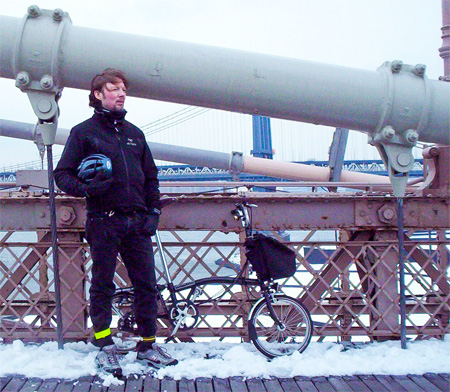
My Brompton folding bicycle is a mainstay of my experience as a sketchbook artist & photographer in New York. I commute all over the city with my sketchbooks, pens, and camera in the shoulder bag that mounts onto the front of the frame. My “other bicycle” is a Motobecane Nomade from the late 1970′s, which I purchased from a Goodwill store for $40 over 10 years ago.
Sketchblog artist Harold Graves with his Brompton T-6 folding bike on the Brooklyn Bridge.
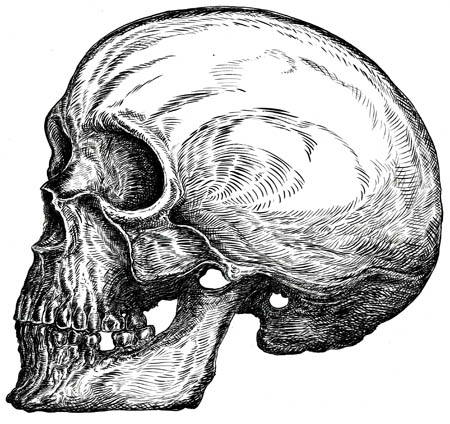
Pen and Ink drawing I did this last year of the skull of a 28-year-old (Croatian?) man who was apparently killed by a blow to the head. This is an epoxy plastic copy purchased from Maxilla and Mandible in New York City, near the Natural History Museum.
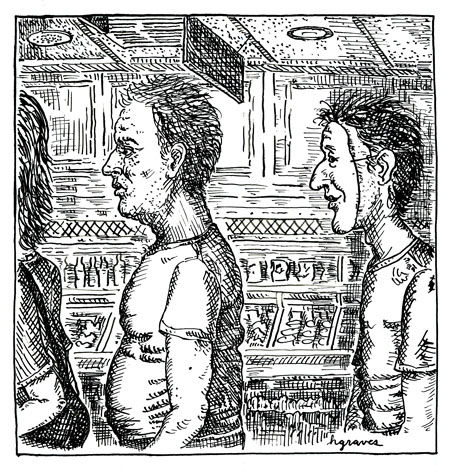
Checkout Line at the Met Foods on Smith Street in Brooklyn
Reinventions of Allan Kaprow’s 1961 installation, Yard
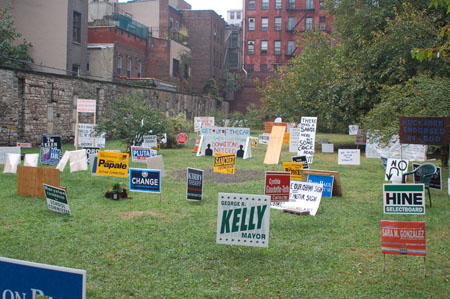
In 1961 Allan Kaprow filled the courtyard of the Martha Jackson Gallery with a pile of automobile tires, and the resulting sculptural/environment/installation piece, Yard, is now regarded by many as the historical root-note for the symphony (some would say cacophony) of environments, happenings, earth-works and installations that have followed, marching along their enigmatic little way right up to the present. One might argue that the surrealists and dadaists were pioneering this territory long before Kaprow came along (the Duchamp installation at the Philadelphia Art Museum comes to mind, as does the various antics of Salvador Dali) but never mind all that. Does anyone really care who came first? Art historians, academics and other artsy egghead-types make their trade by arguing over the fine points of how all these things are to be distinguished from one another; the rest of us can just enjoy looking. A folded flyer/handout/poster accompanies the installation with some interesting factoids and a reflection about Mr. Kaprow’s work as re-imagined by the three artists, William Pope.I., Josiah McElheny, and Sharon Hayes.
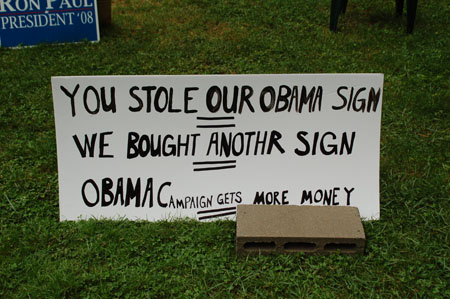
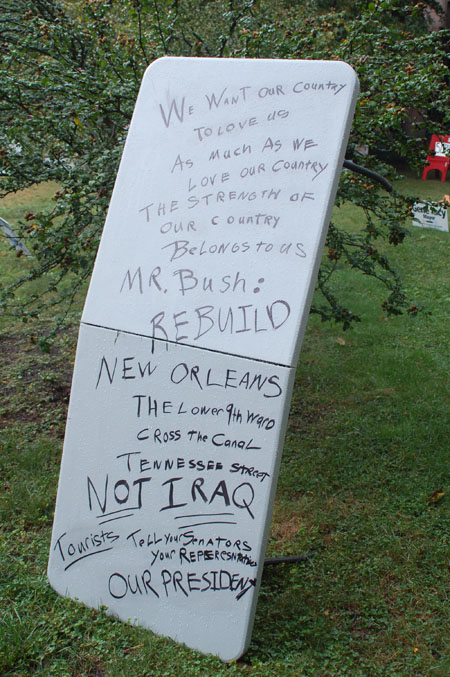
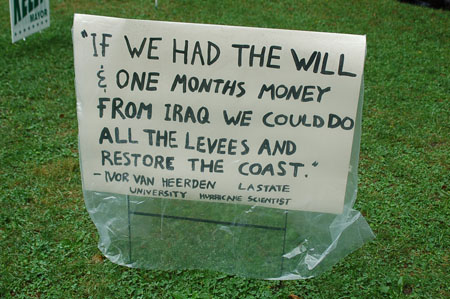
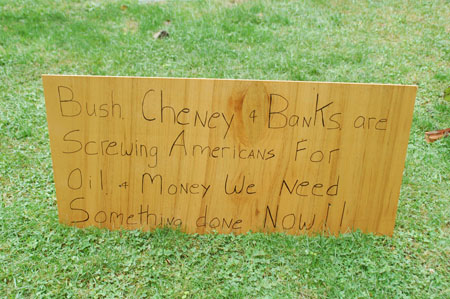
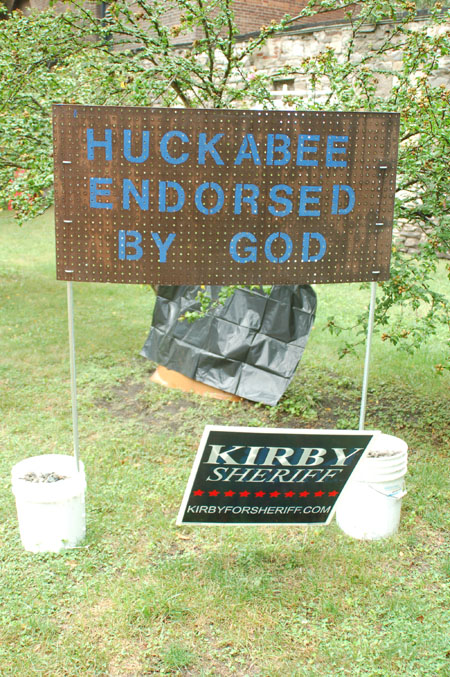
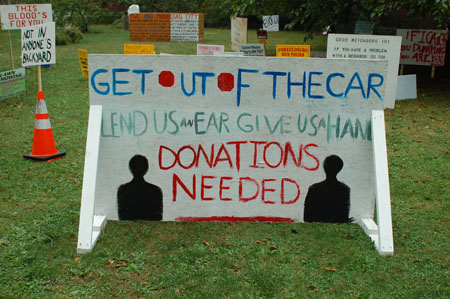
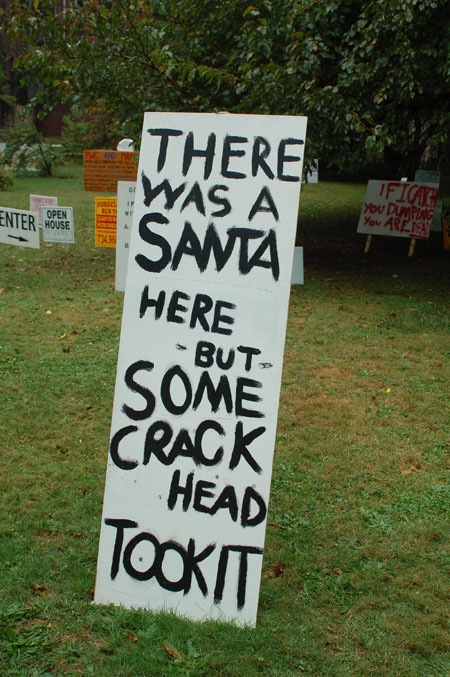
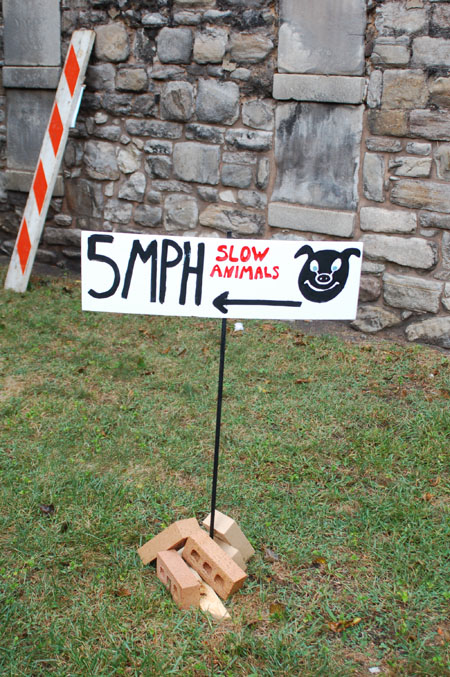
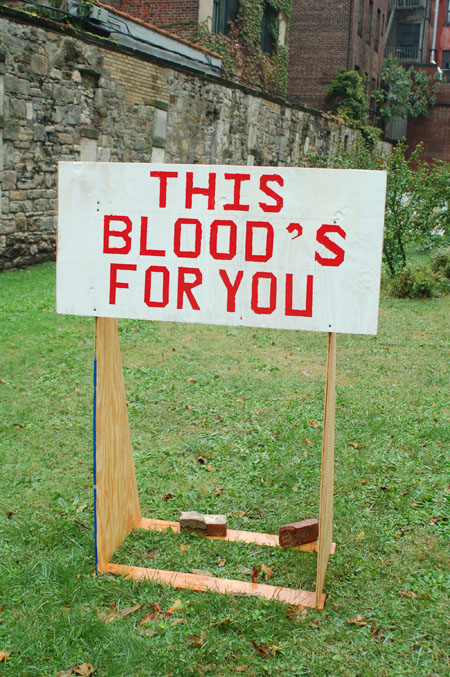
These are photographs I took while visiting Sharon Hayes’ “reinvention piece,” Yard (Sign), which was installed at the New York Marble Cemetery on 2nd Avenue in the East Village October 2-4. (The “Stolen Santa” sign reminds me of Mike Kelly’s work somehow). Yard (Sign) is gone now, but Yard (To Harrow) by William Pope.I. can be viewed at Hauser & Wirth Gallery at 32 East 69th street until October 24th.